




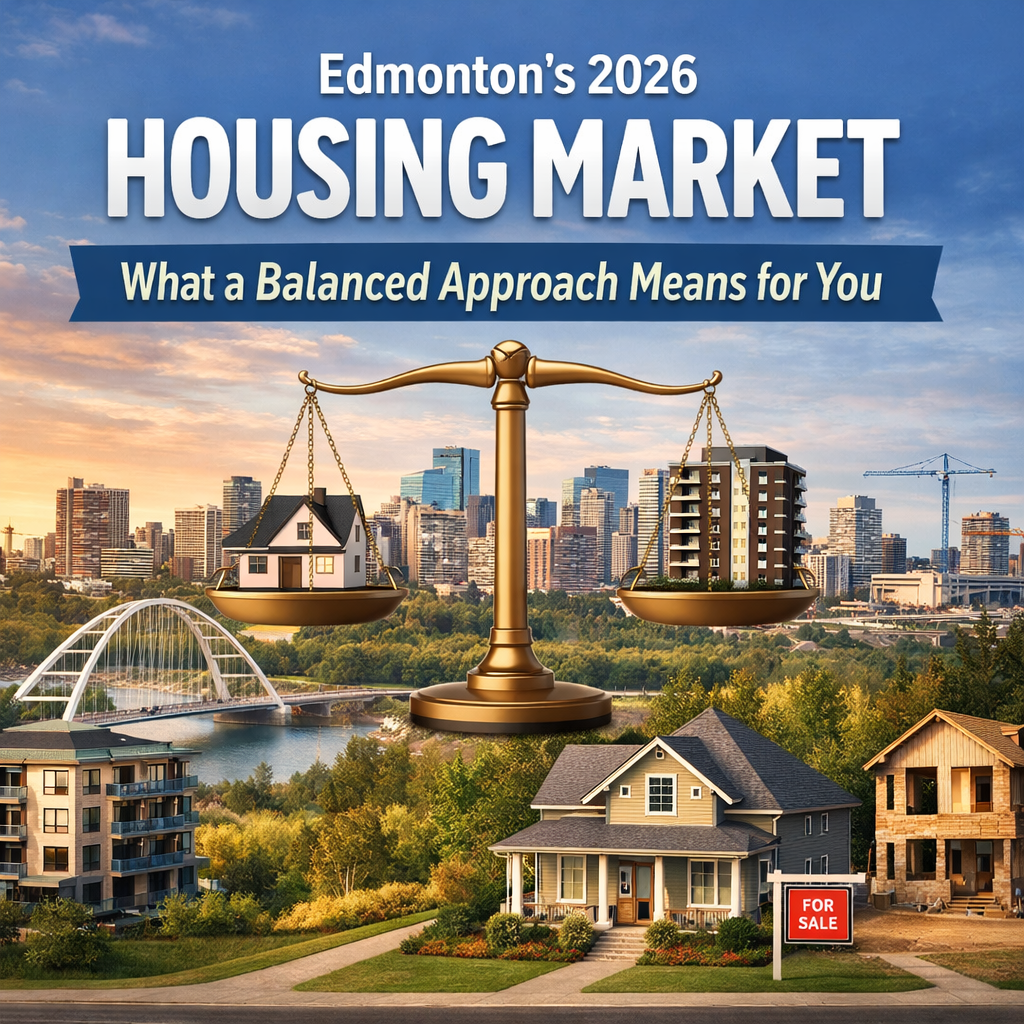
Edmonton's housing market hit a remarkable milestone in 2026 when inventory levels reached a 4.2-month supply, marking the first time in over eight years that the city achieved true market balance. This shift represents more than just numbers on a spreadsheet - it signals a fundamental change that affects every person considering buying or selling property in Alberta's capital. A balanced market occurs when neither buyers nor sellers hold overwhelming advantage, creating conditions where homes sell within reasonable timeframes at fair market values. For Edmonton's community, this balance means greater stability, more predictable pricing, and opportunities for both first-time buyers and seasoned investors to make strategic moves without the pressure of extreme market conditions. This article breaks down what Edmonton's balanced market actually means for your real estate decisions, examining the historical trends that led to this point and the economic factors driving current conditions. You'll discover expert insights on timing your next purchase or sale, understand how population growth and local economic development influence property values, and learn specific strategies for navigating this new market reality. Whether you're a real estate investor looking to expand your portfolio or a homebuyer searching for your perfect property, the data and predictions we'll explore will help you make informed decisions that align with your goals. What does this market balance mean for your specific situation, and how can you position yourself to benefit from these changing conditions?
Understanding Edmonton's Balanced Market
Real estate equilibrium occurs when housing supply and demand reach a state where neither buyers nor sellers dominate negotiations. This condition creates an environment where properties typically sell within 60 to 90 days at prices that reflect true market value rather than artificial inflation or deflation. For purchasers, this means more time to evaluate options, conduct thorough inspections, and negotiate terms without the pressure of bidding wars. Sellers benefit from predictable pricing patterns and reasonable expectations for their property's time on the market.
The current state of Edmonton's real estate sector demonstrates this equilibrium through specific measurable factors. Buyers can now explore multiple properties without facing immediate competition from dozens of other offers, while sellers receive fair market value without extended listing periods that drain their resources and patience.
Current Metrics
Edmonton's housing statistics reveal the foundation of this balanced environment. The total number of listings increased by 8.4 per cent from 33,135 properties in 2024 to 35,931 in 2025, providing buyers with substantially more options than previous years. Average residential sale prices will rise by four per cent going into 2026, representing moderate growth that supports both affordability and seller equity.
Sales volume tells another part of the story, with transactions anticipated to fall by two per cent going into 2026 compared to 2025. This slight decrease reflects buyers taking more time to make decisions rather than rushing into purchases due to limited availability. The pace allows for thorough due diligence and careful consideration of long-term investment potential.
Interest rate reductions have contributed significantly to this stability. The Bank of Canada's lowering of interest rates is improving affordability for buyers while developing resilience against economic uncertainty. These monetary policy changes enable more people to qualify for mortgages and pursue homeownership goals that seemed out of reach during higher rate periods.
Edmonton's Unique Position
Edmonton stands apart from other major Canadian cities through its combination of affordability and growth potential. While Vancouver and Toronto continue experiencing extreme seller's markets with limited inventory, Edmonton offers a more sustainable approach to real estate investment and homeownership. The city's continued in-migration is sustaining strong housing demand without creating the speculative bubbles seen in coastal markets.
Municipal stability following October elections has restored confidence among buyers who previously delayed their property decisions. This political certainty, combined with increased listing inventory, provides opportunities for buyers who were previously unsuccessful in competitive bidding situations to re-engage with greater choice.
Specific neighborhoods demonstrate Edmonton's diverse appeal across different price points and demographics. The neighbourhoods expected to be the most desirable heading into 2026 are Wihkwentowin in the downtown central area, Castle Downs on the Northside, and Chappelle in the southwest, each offering distinct advantages for different buyer profiles.
Analyzing these metrics reveals how Edmonton's position creates opportunities for strategic real estate decisions. Investors can identify undervalued properties with growth potential, while first-time buyers can enter the market without facing the extreme competition found in other major Canadian centers.
Key Trends Shaping 2026
Standalone houses continue dominating Edmonton's residential preferences as families prioritize space and privacy over proximity to urban amenities. The appeal stems from practical considerations - larger yards for children and pets, dedicated parking spaces, and the freedom to modify properties without condo board restrictions. Young professionals who previously rented downtown apartments now seek these properties in established neighborhoods like Riverbend and Summerside, where mature trees and community centers create family-friendly environments. Investment potential drives another segment of buyers toward these properties, as rental demand remains strong among families relocating to Edmonton for employment opportunities in the energy and technology sectors.
The psychological benefits of homeownership manifest most clearly in detached properties, where owners control their living environment completely. Noise concerns disappear when thick walls separate families from neighbors, and maintenance schedules align with personal preferences rather than building management decisions. Edmonton's harsh winters make attached garages and private driveways particularly valuable, eliminating the daily struggle with snow removal that apartment dwellers face in shared parking areas.
Multi-unit residential buildings serve as stepping stones for individuals entering Edmonton's ownership market with limited capital. These properties require significantly lower down payments than detached houses, making homeownership achievable for recent graduates and young couples building their financial foundation. Downtown cores like Oliver and Garneau offer walking access to employment centers, reducing transportation costs while building equity through monthly mortgage payments rather than rent.
First-time purchasers often discover that monthly carrying costs for these units match or fall below rental rates for comparable spaces. The financial advantage becomes more pronounced when factoring in the Home Buyers' Plan, which allows withdrawal of up to $35,000 from registered retirement savings to fund property purchases. These buildings also provide amenities like fitness centers and rooftop terraces that would be unaffordable in detached properties at similar price points.
Connected housing units represent the fastest-growing segment as developers respond to demand for affordable ownership options with yard space. These properties bridge the gap between apartments and detached houses, offering private entrances and small outdoor areas while maintaining lower purchase prices than standalone homes. Neighborhoods like Tamarack and Keswick showcase new developments where young families achieve their ownership goals without stretching budgets beyond comfortable limits.
Infill construction transforms mature neighborhoods by replacing older bungalows with modern multi-unit structures that blend architectural styles with existing streetscapes. These projects increase density while preserving neighborhood character, creating opportunities for buyers who want established community amenities like schools and parks. The City of Edmonton's zoning modifications encourage this development pattern, recognizing that strategic densification supports municipal infrastructure while maintaining livability.
Building codes for these newer constructions emphasize energy efficiency and modern conveniences that older detached properties often lack. Smart home technology, improved insulation, and contemporary floor plans attract buyers who value both functionality and environmental responsibility. These features reduce long-term operating costs while providing the comfort and space that Edmonton residents expect from their primary residences.
Factors Driving Market Changes
Multiple forces converge to reshape Edmonton's real estate environment as demographic shifts, monetary policy adjustments, and construction activity create new opportunities for buyers and investors. These elements work together rather than independently, forming a complex web that determines property values, availability, and transaction timelines across the metropolitan area.
Population Growth
Newcomers arrive in Edmonton at unprecedented rates, with the census metropolitan area recording a growth rate of +3.0% from July 1, 2024, to July 1, 2025. This expansion stems from permanent immigration as the primary driver, while non-permanent residents and interprovincial migration contribute substantial additional demand for housing units. The city attracted the largest net gains from interprovincial migration among all Canadian metropolitan areas at +11,742 people, marking the third consecutive year Edmonton achieved this distinction.
These demographic changes translate directly into housing pressure as each new household requires accommodation within the existing stock or newly constructed properties. Young professionals relocating from other provinces often seek rental units initially, then transition to ownership within two to three years of establishing careers. Immigrant families typically require larger spaces to accommodate extended family members and cultural preferences for multi-generational living arrangements.
The ripple effects extend beyond immediate housing needs as population growth stimulates job creation in service industries, healthcare, and education sectors. These employment opportunities attract additional residents, creating a self-reinforcing cycle that sustains demand for residential properties across all price ranges and neighborhood types.
Economic Influences
Interest rate reductions by the Bank of Canada directly affect mortgage qualification requirements and monthly payment calculations for prospective buyers. Lower borrowing costs enable purchasers to afford higher-priced properties or reduce their monthly housing expenses, freeing up disposable income for other investments or lifestyle improvements. These rate changes particularly benefit first-time buyers who previously struggled to meet debt-to-income ratios required by lending institutions.
Government policy initiatives at municipal, provincial, and federal levels shape market conditions through tax incentives, development approvals, and infrastructure investments. The First-Time Home Buyer Incentive program allows qualified individuals to reduce their mortgage burden through shared equity arrangements with the federal government. Provincial programs like the Home Ownership Incentive provide additional financial support for buyers meeting specific income and property value criteria.
Municipal zoning modifications encourage higher-density construction in established neighborhoods while preserving community character through design guidelines and height restrictions. These policy changes increase the potential housing supply without requiring extensive new infrastructure development in suburban areas.
Construction activity responds to both demographic pressure and economic incentives as developers balance profit margins with market demand. Building permits issued by the City of Edmonton reflect confidence in continued population growth and economic stability. New housing supply enters the market gradually, typically requiring 12 to 18 months from permit approval to occupancy-ready completion.
Analyzing these interconnected forces reveals how Edmonton's real estate environment adapts to changing conditions while maintaining stability for both buyers and sellers. Each element influences the others, creating momentum that supports continued growth and opportunity in the housing sector.
Neighborhood Insights and Opportunities
Location selection determines the success of every real estate transaction, whether you're seeking a primary residence or building an investment portfolio. Each community within Edmonton offers distinct advantages that align with different financial goals and lifestyle preferences. Smart buyers recognize that purchasing in the right area can accelerate equity building while providing daily conveniences that enhance quality of life.
Desirable Neighborhoods
Wihkwentowin stands as Edmonton's premier downtown district, where urban professionals find walking access to corporate headquarters, cultural venues, and transit connections. This central location eliminates lengthy commutes while providing access to restaurants, entertainment, and services within a compact radius. The area attracts young executives and empty nesters who prioritize convenience over space, creating steady demand for condominiums and converted loft units.
Castle Downs represents suburban family living at its finest, with established schools, recreational facilities, and mature landscaping that creates an immediate sense of community. Families choose this northside location for its combination of affordability and amenities, including multiple parks, shopping centers, and youth sports leagues. The neighborhood's reputation for safety and stability makes it particularly appealing to first-time homebuyers who want predictable property appreciation.
Chappelle continues developing as Edmonton's southwestern growth area, where new construction meets modern urban planning principles. This master-planned community incorporates walking trails, retail centers, and schools within a cohesive design that appeals to families seeking contemporary living environments. The area's newness means buyers can purchase properties with modern building standards and energy-efficient systems that reduce long-term operating costs.
Investment Opportunities
Infill developments transform older neighborhoods by replacing aging bungalows with multi-unit structures that maximize land use while respecting existing community character. These projects create opportunities for investors to purchase properties in established areas with mature infrastructure and proven demand patterns. Mature neighborhoods like Bonnie Doon and Strathcona offer infill potential where investors can acquire older properties for renovation or redevelopment.
Rental suite conversions allow property owners to generate additional income from basement spaces or garage conversions in single-family homes. Edmonton's zoning regulations permit secondary suites in most residential areas, creating flexibility for homeowners who want to offset mortgage payments through rental income. These arrangements work particularly well in neighborhoods near the University of Alberta or major employment centers where tenants value proximity over luxury amenities.
Successful navigation of Edmonton's micro-markets requires systematic research and strategic thinking. Each community operates with unique dynamics that affect both purchase decisions and long-term investment potential.
- Research local amenities and schools to understand what attracts residents and maintains property values over time
- Consider future development plans announced by the City of Edmonton that could affect traffic patterns, property taxes, or neighborhood character
- Evaluate rental potential for investment properties by analyzing vacancy rates, average rents, and tenant demographics in specific areas
- Study recent sales data to identify pricing trends and determine whether properties are appreciating faster than city-wide averages
Tracking these neighborhood-specific factors helps buyers identify communities where their investment goals align with market realities. Properties in areas with planned LRT extensions or major infrastructure improvements often appreciate faster than those in static neighborhoods without growth catalysts.
Expert Opinions and Predictions
Industry professionals who track Edmonton's residential sector daily provide valuable perspective on what lies ahead for buyers and sellers navigating this balanced environment. Their collective experience analyzing market cycles, demographic patterns, and economic indicators offers guidance that individual participants cannot achieve through personal observation alone. These specialists monitor transaction volumes, pricing patterns, and inventory levels across dozens of neighborhoods simultaneously, creating comprehensive views of where the market is heading.
Real estate professionals anticipate that Edmonton's current stability will persist through 2026 and beyond, driven by sustained population growth and diversified economic activity. Leading agents report that buyer behavior has shifted from panic purchasing to methodical evaluation processes, allowing for thorough property inspections and careful financial planning. This change benefits both parties in transactions, as sellers receive realistic offers from qualified buyers while purchasers avoid overpaying for properties that may not meet their long-term needs. The elimination of bidding wars creates space for negotiation on closing dates, included appliances, and minor repairs that enhance satisfaction for everyone involved.
Market analysts project that average residential prices will continue rising at moderate rates between three and five percent annually, maintaining affordability while building equity for current homeowners. This steady appreciation reflects genuine demand rather than speculative activity, creating sustainable value growth that supports long-term wealth building. Sales volume is expected to stabilize around current levels, with slight seasonal fluctuations that follow historical patterns rather than dramatic swings caused by external market pressures. The predictability enables both buyers and sellers to plan their moves strategically rather than reacting to sudden market shifts.
Mortgage specialists observe that interest rate stability will support continued transaction activity throughout the forecast period. Lower borrowing costs enable more families to qualify for homeownership while reducing monthly payments for existing homeowners considering refinancing or property upgrades. This financial environment particularly benefits first-time buyers who previously struggled with qualification requirements during higher rate periods. Investment buyers also gain advantages through improved cash flow potential and reduced carrying costs for rental properties.
Construction industry experts warn that building material costs and labor shortages could constrain new housing supply, potentially creating upward pressure on existing property values. However, municipal zoning reforms that encourage higher-density development may offset these challenges by increasing the number of units available within established neighborhoods. The balance between supply constraints and policy solutions will determine whether Edmonton maintains its current affordability advantages relative to other major Canadian cities.
Demographic specialists highlight that continued immigration and interprovincial migration will sustain housing demand across all property types and price ranges. Young professionals relocating for career opportunities typically rent initially but transition to ownership within two to three years, creating predictable demand cycles that support market stability. Families seeking larger homes drive activity in suburban neighborhoods, while empty nesters downsizing fuel condominium and townhouse sales in central areas.
Capitalizing on these professional insights requires understanding that market timing matters less in balanced conditions than in extreme buyer's or seller's markets. Properties priced appropriately sell within reasonable timeframes, while overpriced listings sit on the market until sellers adjust their expectations to match current conditions.
Practical Strategies for Buyers and Sellers
Successful real estate transactions require specific tactics that align with Edmonton's current market conditions, where balanced dynamics create opportunities for both purchasing and selling properties. The key lies in understanding how to position yourself advantageously while recognizing that traditional aggressive approaches may no longer serve your interests effectively. Smart participants adapt their methods to match the rhythm of a market where neither buyers nor sellers hold overwhelming power.
For Buyers:
- Secure mortgage pre-approval before viewing properties to demonstrate serious intent and financial capability to sellers who receive multiple offers
- Research comparable sales within your target neighborhoods during the past three months to establish realistic price expectations and identify fair market values
- Include inspection conditions in your offers to protect against costly surprises, as sellers now accept reasonable contingencies without losing deals
- Schedule viewings during different times of day and week to assess traffic patterns, noise levels, and neighborhood activity that affect daily living quality
- Negotiate closing dates that align with your timeline rather than rushing to accommodate seller preferences, since market balance provides flexibility
- Focus on properties that have been listed for 30-45 days, as motivated sellers become more receptive to reasonable offers and terms
For Sellers and Investors:
- Price properties within 5% of recent comparable sales to attract qualified buyers quickly rather than testing market limits with inflated asking prices
- Stage homes with neutral décor and minimal personal items to help potential buyers envision themselves living in the space
- Address obvious maintenance issues like squeaky doors, dripping faucets, and scuffed walls before listing to create positive first impressions
- Market properties in established neighborhoods where detached homes continue to see steady demand and infrastructure supports family living
- Consider offering flexible possession dates to accommodate buyers who need time to sell existing properties or arrange financing
- Target investment opportunities in areas near LRT stations and major employment centers where rental demand remains consistent
For Investment Focus:
- Identify properties suitable for legal secondary suites to maximize rental income potential and appeal to house-hacking buyers
- Research neighborhoods experiencing infrastructure improvements or planned developments that could drive future appreciation
- Calculate total carrying costs including property taxes, insurance, and maintenance reserves before committing to rental property purchases
- Analyze rental rates for similar properties to ensure positive cash flow or break-even scenarios that build long-term equity
Timing decisions around Edmonton's seasonal patterns can significantly impact transaction success and financial outcomes. Spring listings typically generate more buyer interest as families prefer moving during school breaks, while fall purchases often provide better negotiating opportunities as seller motivation increases. Winter transactions frequently involve the most serious participants on both sides, creating efficient processes with fewer complications. Understanding these cycles helps both buyers and sellers choose optimal timing for their specific situations rather than rushing into unfavorable market windows.
Final Thoughts
Edmonton's housing market stands at a crossroads in 2026, shifting toward balance after years of volatility. We've examined the historical patterns that brought us here, from the oil boom cycles to population surges that reshaped demand. The data reveals clear trends - inventory levels stabilizing, price growth moderating, and buyer-seller dynamics reaching equilibrium.
This balanced state creates unique opportunities. Buyers gain negotiating power they haven't seen in years, while sellers can still achieve fair market value without the pressure of rapid price swings. Population growth continues driving long-term demand, supported by economic diversification efforts that reduce dependence on single industries.
Understanding these market dynamics gives you a significant advantage. Whether you're a first-time buyer waiting for the right moment or an investor analyzing rental yields, this knowledge helps you make decisions based on facts rather than emotions. The balanced market rewards those who act strategically rather than reactively.
Market conditions change, but informed decision-making remains constant. The insights we've covered - from supply-demand fundamentals to economic indicators - provide the foundation for smart real estate moves. Success comes to those who study the patterns and adapt their strategies accordingly.
Connect with Edmonton real estate professionals who understand these local nuances. Their expertise, combined with your newfound market knowledge, creates a powerful combination for achieving your housing goals. The balanced market of 2026 offers possibilities for those prepared to seize them.
Check out this article next