



Looking at homes in Edmonton this fall? Learn what to check during a showing, from heating and windows to the roof, drainage and insulation.
Fall can tell you things about a home that a bright summer showing may not.
As temperatures drop in Edmonton, you have an opportunity to pay closer attention to how a property handles cooler weather. Is the home warm and comfortable? Do the windows feel drafty? Is water being directed away from the foundation? Does the roof show signs of wear before winter arrives?
These observations do not replace a professional home inspection. They can, however, help you notice questions worth asking before you decide whether a property deserves a closer look.
Here are five areas Edmonton buyers should pay attention to during a fall showing.
1. Listen to the Heating System, Not Just the Thermostat
A home can feel comfortable when you walk through the door, but that does not necessarily tell you how well its heating system is performing.
During a fall showing, pay attention to the furnace or other heating equipment. Is it running? Does it start and stop normally? Does it sound unusually loud, rattle, bang or struggle to maintain a comfortable temperature?
Also notice how evenly heat is distributed throughout the home.
A main floor that feels comfortable while a basement or upper floor feels noticeably colder may be worth asking about. In larger homes, additions or rooms located farther from the main heating source can sometimes have different comfort levels.
You can also ask the seller or listing representative about the age of the furnace, maintenance history and whether any heating components have been replaced.
You are not trying to diagnose the system during a showing. You are looking for signs that deserve a closer inspection.
Alberta specifically identifies heating and cooling systems among the major systems buyers may want inspected before closing.
Buyer question to ask:
"When was the furnace last serviced, and has it had any major repairs or replacements?"
2. Pay Attention to the Windows and How the Home Feels Around Them
Windows can tell you quite a bit about a home's comfort and energy performance.
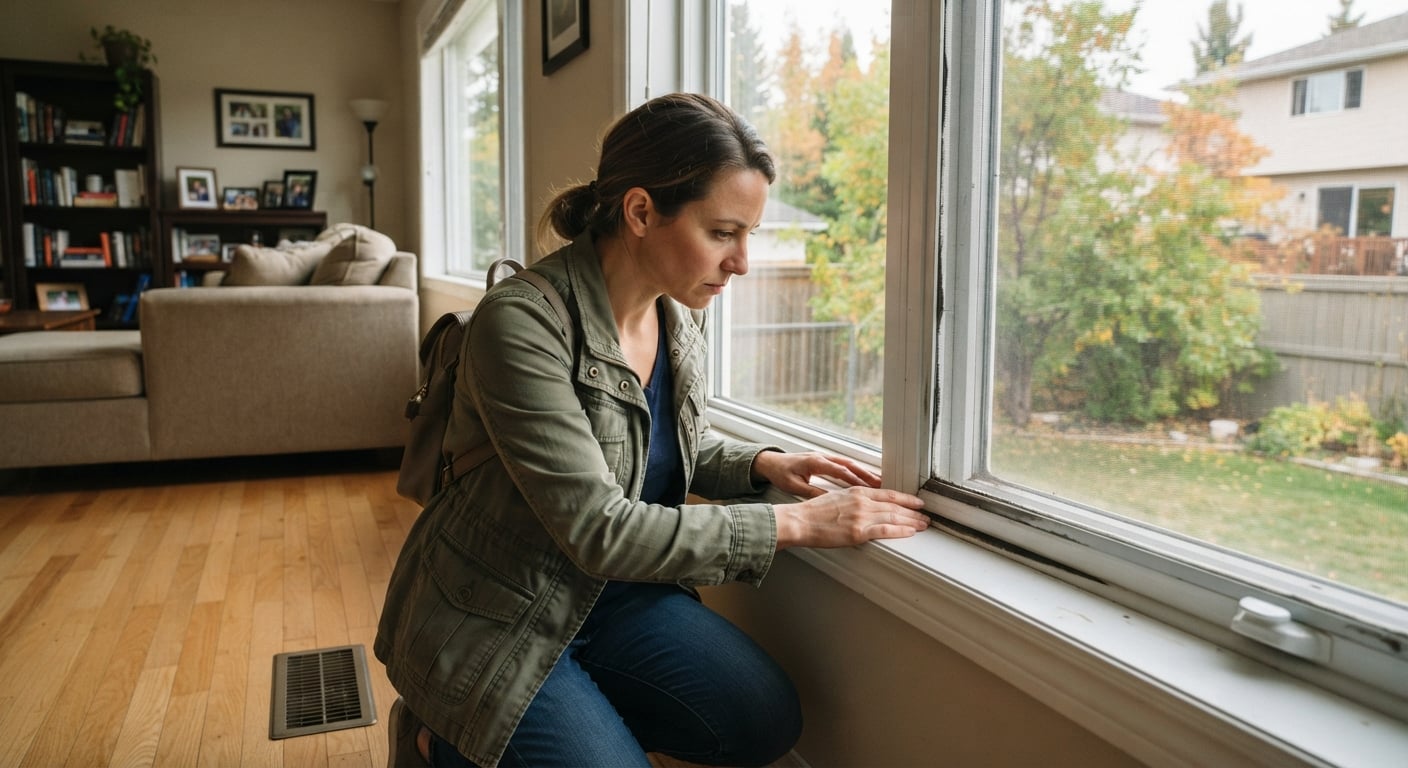
During a fall showing, stand near several windows for a moment. Do certain areas feel noticeably colder? Can you feel air movement around the frame? Do you see condensation, damaged seals, cracked glass or signs of moisture?
Look at more than just the view.
Check the condition of the frames, trim and surrounding walls. If a window appears damaged or poorly sealed, ask whether it has been repaired or replaced.
Edmonton's own home efficiency guidance notes that leaky windows can allow outside air in while allowing heated or cooled air to escape. The City also identifies energy-efficient windows as one way to improve home performance.
For buyers, the important point is not that every older window needs to be replaced. It is that the condition of the windows can affect comfort, maintenance and future costs.
Buyer question to ask:
"Which windows have been replaced, and when were they installed?"
3. Look at the Roof Before You Fall in Love With the Interior
It is easy to spend an entire showing looking at kitchens, bathrooms, flooring and finishes.
Do not forget to look up.
From ground level, see what you can safely observe about the roof. Look for visibly damaged, missing or deteriorated shingles. Pay attention to areas around roof penetrations, vents, chimneys and other features where water management can become important.
Inside the home, look for clues that may warrant further investigation. Water staining on ceilings or around exterior walls does not automatically mean there is an active roof problem, but it is something to ask about.
The condition of the roof matters because it is part of the home's building envelope, the part of the house that separates the interior from the outside environment.
The City of Edmonton identifies the roof, walls and foundation as components of the building envelope and notes that the envelope has a direct effect on comfort, heating costs and maintenance.
A buyer should not attempt to determine the remaining life of a roof simply by looking at it during a showing. If there are concerns, a professional inspection can provide a much better assessment.
Buyer question to ask:
"Do you know when the roof was last replaced, and are there any records for the work?"
4. Check Where the Water Goes
Fall weather gives buyers another useful opportunity: look at how water is being managed around the property.
Walk around the exterior where accessible and pay attention to the eavestroughs and downspouts.
Are the eavestroughs visibly damaged or overflowing? Are downspouts directing water away from the foundation? Does the ground appear to slope away from the house, or are there areas where water could collect close to the foundation?
These details matter because keeping water away from the home can help reduce the risk of water-related problems.
The City of Edmonton explains that eavestroughs collect water from the roof while downspouts direct it toward the ground and away from the house. Its climate-resilient home guidance recommends maintaining these systems to help protect homes from water damage.
Also pay attention to the basement. Musty odours, staining or visible signs of previous moisture are worth asking about rather than ignoring.
Again, one observation does not automatically mean a property has a serious problem. The goal is to notice potential issues early and ask better questions.
Buyer question to ask:
"Have there ever been any water or drainage issues around the home or basement?"
5. Think Beyond the Walls: Insulation and Overall Home Condition
A comfortable showing is not just about the temperature inside the house.
Think about how the home is likely to perform once Edmonton's colder weather arrives.
Notice whether exterior walls, floors near exterior doors or rooms below the roofline feel unusually cold. Look for visible gaps, damaged weatherstripping or areas where drafts may be entering.
If you have access to the attic or other unfinished areas as part of the showing, pay attention to the condition and apparent amount of insulation, but do not assume that what is visible tells the whole story.
Insulation works together with the rest of the building envelope. Edmonton's guidance notes that proper insulation helps keep heat inside during cold weather, while effective windows and sealing help reduce unwanted air movement.
This is also where the bigger picture matters.
Do not focus so heavily on one feature that you overlook the overall condition of the home. Look at the exterior, basement, ceilings, walls, floors, doors and visible mechanical components as a complete system.
A house does not need to be perfect to be a good purchase. The question is whether the condition is understood well enough for you to make an informed decision about the property and any future maintenance it may require.
Buyer question to ask:
"Are there any known issues with insulation, drafts, moisture or the building envelope?"
A Fall Showing Is About Asking Better Questions
You do not need to inspect a house like a professional home inspector during your first showing.
Instead, use the season to your advantage.
Cold weather can make certain comfort issues more noticeable. Fall rain can give you clues about drainage. Shorter days and cooler temperatures can make you more aware of windows, drafts and heating performance.
And if you find something that concerns you, do not jump straight to assuming the worst.
Ask questions.
Find out what the seller knows. Ask about maintenance records and previous repairs. If you decide to move forward with the property, consider arranging a professional home inspection and making sure the inspection covers the areas that matter to you.
Alberta recommends hiring a licensed home inspector and notes that the inspector should provide a written report covering the items included in the inspection contract.
The best showing is not necessarily the one where everything looks perfect.
It is the one where you leave with a clearer understanding of the home, the questions you still need answered and the condition you may be taking on.
Before You Leave the Showing
Take a final walk around and ask yourself:
- Does the home feel consistently comfortable?
- Did I notice any unusual sounds or odours?
- Did I see signs of moisture or water damage?
- What do I know about the furnace and major systems?
- What do I know about the roof and windows?
- Does the exterior appear to direct water away from the home?
- Are there any maintenance questions I should investigate further?
Those questions can help turn a quick walkthrough into a more informed home-buying decision.
If you are viewing homes in Edmonton this fall, take your time, look beyond the finishes and pay attention to how the home is likely to perform when the weather gets colder.
Check out this article next